Blower Trucks for Mulch Installation vs. Hand Installation
November 6, 2025
Not All Mulch Is Created Equal: Why IPEMA-Certified Playground Chips Are Non-Negotiable for Community Playgrounds
April 24, 2026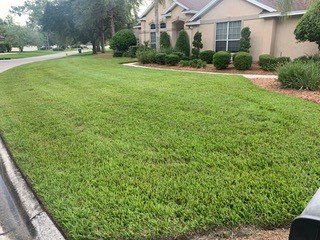
Restoring Community Green Spaces After Hard Freeze Events
Key Insight
A properly executed top dressing program applied in the weeks following a hard freeze can accelerate turf recovery by 40-60%, reduce soil compaction, improve drainage, and deliver the nutrient-rich foundation that dormant root systems need to re-establish vigorous spring growth.
Executive Summary
Hard freeze events, defined as sustained temperatures at or below 28°F (-2.2°C) for two or more hours, inflict significant physiological and structural damage on community turf systems. Parks, sports fields, HOA common areas, school grounds, and municipal green spaces all face the same challenge each spring: recovering dormant, stressed, or damaged turfgrass as quickly and fully as possible.
Top dressing, the application of a thin, uniform layer of a blended topdressing material such as compost, sand, or a compost-soil mix directly onto the turf surface, is one of the most scientifically validated and cost-effective recovery tools available. When timed correctly following a hard freeze, top dressing accelerates rooting, corrects soil structure disrupted by freeze-thaw cycles, reintroduces beneficial microbiology, and provides a seedbed for overseeding or terra-seeding programs.
This white paper is designed to help community managers, groundskeepers, HOA boards, municipal parks departments, and landscape procurement officers understand the science behind top dressing, the specific damage hard freeze events cause, the optimal application window, and the long-term ROI of a professional post-freeze top dressing program.
Understanding Hard Freeze Damage to Community Turf
What Happens Underground
When ground temperatures drop rapidly and remain below freezing, soil water expands as it freezes. This expansion creates a phenomenon known as frost heave, where soil layers are physically displaced upward. Root systems, particularly those of cool-season grasses such as Kentucky bluegrass, tall fescue, and perennial ryegrass, are mechanically disrupted, torn, or desiccated by this movement.
For warm-season grasses such as Bermudagrass and Zoysiagrass, which enter deep dormancy, extended hard freeze events can kill root crowns outright, particularly when freeze penetrates deeper than 2 inches into the soil profile.
Freeze-Thaw Cycle Soil Compaction
Equally destructive is the compaction that follows repeated freeze-thaw cycling. As frozen soil thaws, surface layers re-settle unevenly, creating:
- Compacted surface layers that restrict oxygen and water infiltration
- Air pockets and voids in the root zone that leave roots unsupported
- Disrupted soil aggregation, reducing the pore space essential for root gas exchange
- Elevated bulk density in the top 1-3 inches of soil
This compacted, structurally disrupted soil is hostile to new growth. Even if the grass plant itself survived the freeze, a compacted, poorly aerated soil will significantly delay spring green-up and can permanently weaken stands in high-traffic areas.
Desiccation and Crown Death
Hard freezes, especially those accompanied by low humidity and wind, cause significant desiccation (drying out) of leaf tissue and, in severe cases, the growing crown. The crown, the meristematic region at the base of the grass plant from which new shoots originate, is the most critical structure for turf recovery. Crown death rates of 20-40% are not uncommon in poorly prepared turf following a severe freeze event.
The Biological Toll
Soil microbiology, the network of bacteria, fungi, and other microorganisms that decompose organic matter, fix nitrogen, and support root health, is also disrupted by hard freezes. Cold temperatures dramatically reduce microbial activity, and freeze-thaw cycles can physically lyse (rupture) microbial cells. This means spring turf recovery begins with a depleted biological system, further slowing natural recovery.
Why Top Dressing Is the Primary Recovery Tool
Restoring Soil Structure
A properly formulated top dressing material, typically a blend of high-quality compost and topdressing sand, or a sandy loam mix, physically fills surface voids and cracks created by frost heave, re-levels the turf surface, and introduces organic matter that improves soil aggregation over time. The result is a more uniform, firm, yet porous surface that supports both immediate recovery and long-term turf health.
Reintroducing Beneficial Microbiology
Quality compost-based top dressings are teeming with beneficial microorganisms. When applied to freeze-stressed turf, top dressings essentially re-inoculate the soil with the biological activity that cold temperatures suppressed. These microorganisms rapidly begin decomposing thatch, mineralizing nutrients, and supporting root health functions that are essential for spring recovery.
Nutrient Delivery at the Root Zone
Unlike broadcast granular fertilizers, which must first dissolve and migrate through the soil column, top dressing places organic nutrients directly at the surface, where rainfall and irrigation carry them into the root zone in a slow-release, plant-available form. This is particularly valuable in spring, when cool soil temperatures slow the uptake of synthetic fertilizer products.
Creating an Ideal Seedbed for Overseeding
In many post-freeze recovery situations, overseeding or terra-seeding is required to fill bare or thinned areas. Top dressing creates the perfect seedbed: a fine, moisture-retentive, nutrient-rich layer of material in direct soil contact with the seed. Germination rates in properly top-dressed areas consistently outperform untreated bare-soil overseeding by a significant margin.
Thatch Management
Freezing temperatures accelerate thatch breakdown in some grass species but can also cause a thatch layer to become hydrophobic (water-repelling) once it dries after thawing. A top dressing application introduces the organic matter and microbiology needed to accelerate thatch decomposition and restore normal water infiltration patterns.
Optimal Timing: The Post-Freeze Application Window
Timing is everything in post-freeze top dressing. Applying too early, before the final frost risk has passed and soil temperatures are consistently above 40°F (4.4°C), can trap moisture and create conditions favorable to snow mold and other cold-temperature pathogens. Applying too late misses the critical early-spring recovery window when turf plants are most receptive to external inputs.
| Timing Window | Soil Temp / Conditions | Recommendation |
| Immediately post-freeze | Below 40°F / Soil still frozen or saturated | Wait. Assess damage only. |
| Early spring green-up | 40-50°F / Turf beginning to show green | OPTIMAL WINDOW — Apply top dressing now. |
| Active spring growth | Above 55°F / Full green-up underway | Good — still beneficial, especially for thatch. |
| Late spring / summer | Above 65°F / Dense canopy established | Late — recovery opportunity largely passed. |
The ideal application window is the 2–4-week period immediately following the last hard freeze of the season, once soil temperatures at 2-inch depth are consistently above 40°F and the turf has begun to break dormancy. This is the point at which the grass plant’s metabolic activity accelerates and it can best utilize the structural, biological, and nutritional inputs that top dressing provides.
Top Dressing Materials and Application Specifications
Material Selection
Not all top dressing materials are created equal. Material selection should be based on the existing soil type, the level of freeze damage, and whether overseeding is planned as part of the recovery program.
- Compost-Sand Blend (most common): A 60/40 or 70/30 blend of aged compost and coarse sand. Improves soil structure, adds organic matter, and is compatible with most cool- and warm-season grass species.
- Straight Compost: Best for turf on clay-heavy soils where biological activity and organic matter content need the greatest boost. Not recommended for overseeding in wet conditions.
- Sandy Loam Topdressing: Ideal for sports fields and high-traffic community spaces that need improved drainage and firmness. Often used in conjunction with core aeration.
- Specialized Bio-Active Blends: Premium products incorporating mycorrhizal inoculants, composted biochar, or beneficial bacteria. Best used when turf biological health has been severely compromised.
Application Rates
- Light Recovery Dressing: 1/8-to-1/4-inch depth – ideal for turf with minimal bare spots and good crown survival rates.
- Standard Post-Freeze Application: 1/4-to-1/2-inch depth – appropriate for turf with 20-40% thinning or freeze-damaged areas.
- Heavy Restoration: 1/2-to-3/4-inch depth – used for severely damaged turf with >40% bare areas; typically combined with core aeration and overseeding.
Integration with Core Aeration
For turf with significant soil compaction from freeze-thaw cycling, top dressing should follow immediately after core aeration. Aeration cores should be allowed to dry for 24-48 hours and then broken up by drag mat before top dressing is applied. This allows the top dressing material to fill the aeration channels, delivering organic matter and beneficial biology directly to the 3–4-inch root zone depth where it will have the greatest impact.
Terra-Seeding as a Complement
Where freeze damage has resulted in bare or thin areas exceeding 25% of the turf surface, American GroundPro recommends integrating terra-seeding with the top dressing program. Terra-seeding, the application of a hydraulic seed-and-mulch slurry directly onto the prepared top-dressed surface, provides superior seed-to-soil contact, moisture retention, and germination rates compared to broadcast overseeding alone. The top dressing layer acts as an ideal growth medium, and the terra-seeding mulch matrix protects seed from bird predation, washout, and desiccation.
The Community Impact of Delayed Recovery
For community managers and municipal parks departments, delayed turf recovery following a hard freeze is not merely an aesthetic problem. It carries measurable operational, safety, and financial consequences:
- Increased erosion risk: Bare and thinned turf exposes soil to spring rainfall and runoff, accelerating erosion on slopes, drainage swales, and embankments.
- Weed pressure: Gaps in turf canopy created by freeze damage are rapidly colonized by annual weeds, particularly crabgrass and annual bluegrass, if not addressed early.
- Compaction escalation: Foot traffic and maintenance equipment on bare, saturated post-freeze soil dramatically accelerates compaction, creating a cycle of degradation that becomes increasingly costly to reverse.
- Reduced facility usability: Sports fields, playgrounds, and park spaces with poor turf quality are often restricted from use, impacting community programs, lease agreements, and public satisfaction.
- Higher long-term renovation costs: Turf that is allowed to decline post-freeze often requires complete renovation, including deep tilling, soil amendment, and re-establishment, at a cost 5-10 times greater than a proactive top dressing program.
Return on Investment: The Case for Professional Top Dressing
| Metric | Estimated Impact |
| Accelerated turf recovery vs. untreated | 40-60% faster green-up |
| Reduction in post-freeze weed pressure | Up to 55% fewer weed occurrences |
| Crown survival rate improvement | 15-25% higher survival with top dressing |
| Overseeding germination rate improvement | 30-50% higher germination vs. untreated bare soil |
| Long-term renovation cost avoidance | Proactive program: 1/5 to 1/10 the cost of full renovation |
| Extended turf lifecycle | Annual top dressing adds 3-5 years to turf system lifespan |
These outcomes translate directly into reduced total cost of ownership for community turf assets, a compelling argument for budget-conscious community managers and municipal procurement officers who are often focused on short-term line item costs rather than lifecycle economics.
The American GroundPro Post-Freeze Turf Recovery Program
American GroundPro offers a comprehensive, professionally managed post-freeze turf recovery program designed for community associations, municipal parks departments, schools, sports facilities, and property management companies. Our program includes:
- Damage Assessment & Mapping: Detailed post-freeze site walk with documented assessment of crown death rates, bare area percentages, soil compaction levels, and drainage conditions.
- Custom Top Dressing Specification: Material selection, depth recommendation, and application rate tailored to your specific turf type, soil profile, and damage level.
- Core Aeration Integration: Pre-top dressing aeration services where soil compaction has been identified, ensuring maximum material penetration.
- Professional Top Dressing Application: Uniform application using calibrated equipment, ensuring consistent depth and complete surface coverage without smothering existing turf.
- Terra-Seeding for Bare Areas: Hydraulic seeding of bare and damaged zones, fully integrated with the top dressing application for optimized germination.
- Erosion Repair: Stabilization of embankments, drainage channels, and bare slopes exposed by freeze damage, using American GroundPro’s proven erosion control systems.
- Follow-Up Monitoring: Post-application site visit to assess germination progress, drainage performance, and recovery trajectory.
American GroundPro is also an IPEMA-certified installer of Engineered Wood Fiber (EWF) for playground surfaces, making us a full-service ground maintenance partner for communities managing both turf and play surface assets.
Conclusion
A hard freeze is not the end of a healthy community turf system, but the recovery window that follows is critical. Top dressing is the most scientifically validated, cost-effective, and operationally practical tool available to accelerate turf recovery, restore soil health, and protect community green space assets from the cascading consequences of untreated freeze damage.
The data is clear: communities and facilities that invest in a professionally executed post-freeze top dressing program see dramatically faster recovery, significantly reduced weed and erosion pressure, and substantially lower long-term turf maintenance costs. Those that delay or forgo treatment face compounding damage that eventually requires far more expensive intervention.
American GroundPro stands ready to partner with community managers, parks directors, HOA boards, and facility operators to develop and execute a post-freeze recovery plan tailored to your specific needs. We bring the expertise, equipment, and professional materials to deliver results you can see — and measure.
Contact American GroundPro
To schedule a post-freeze turf assessment or request a proposal for our Top Dressing & Turf Recovery Program, contact your American GroundPro representative. Our team is ready to assess your site, develop a customized recovery plan, and mobilize quickly during the critical spring application window.